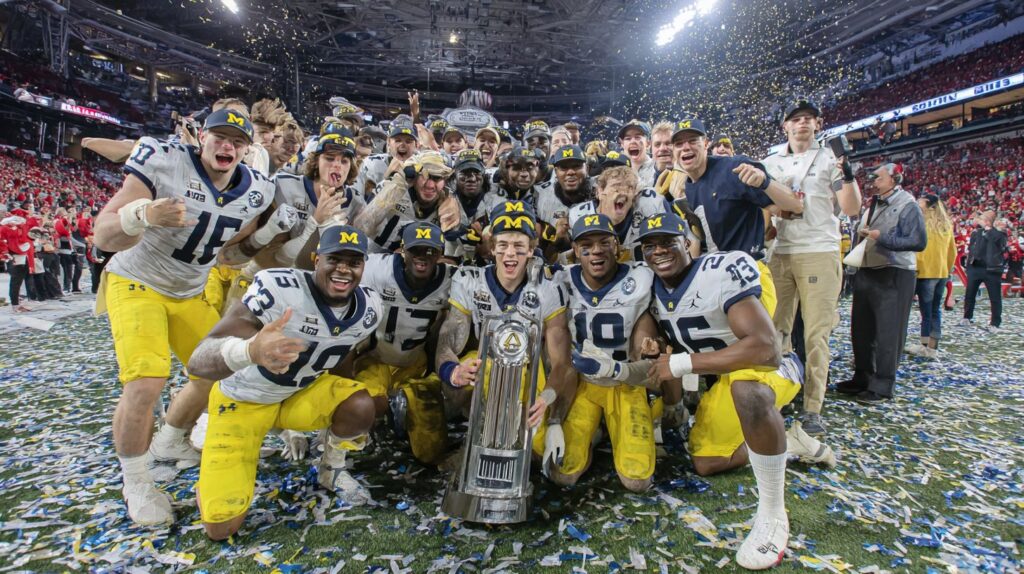
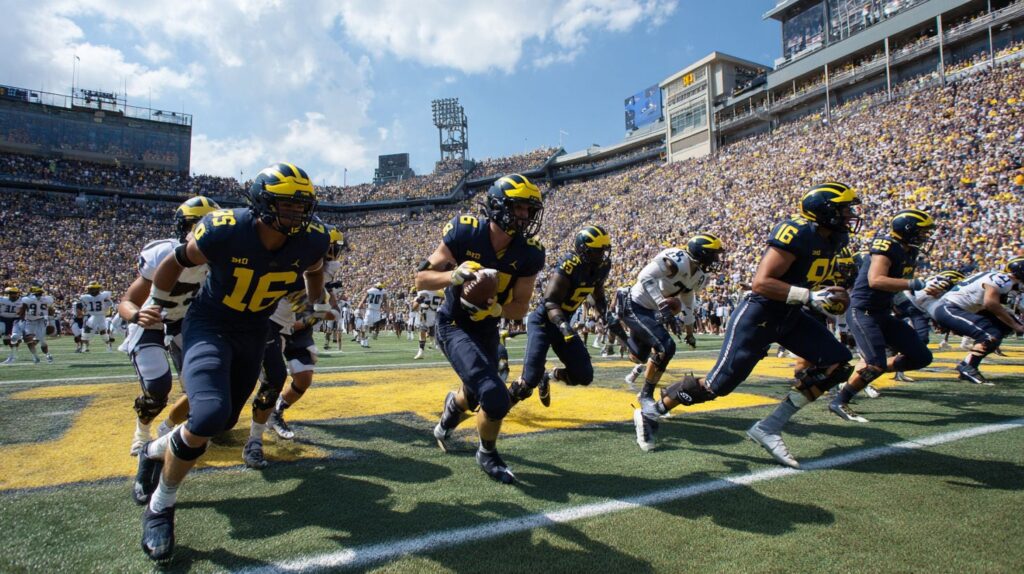
As Michigan football eyes a dominant 2026 campaign, whispers of a revolutionary offensive scheme under new leadership ignite excitement. Following recent triumphs, why does this makeover matter? This preview dives into scheme evolution, quarterback prospects, revamped coaching-including the OC profile-returning stars, elite recruits, transfers, line rebuild, and bold projections. What gridiron magic awaits? Discover now.
Michigan Football 2026 Offense Preview
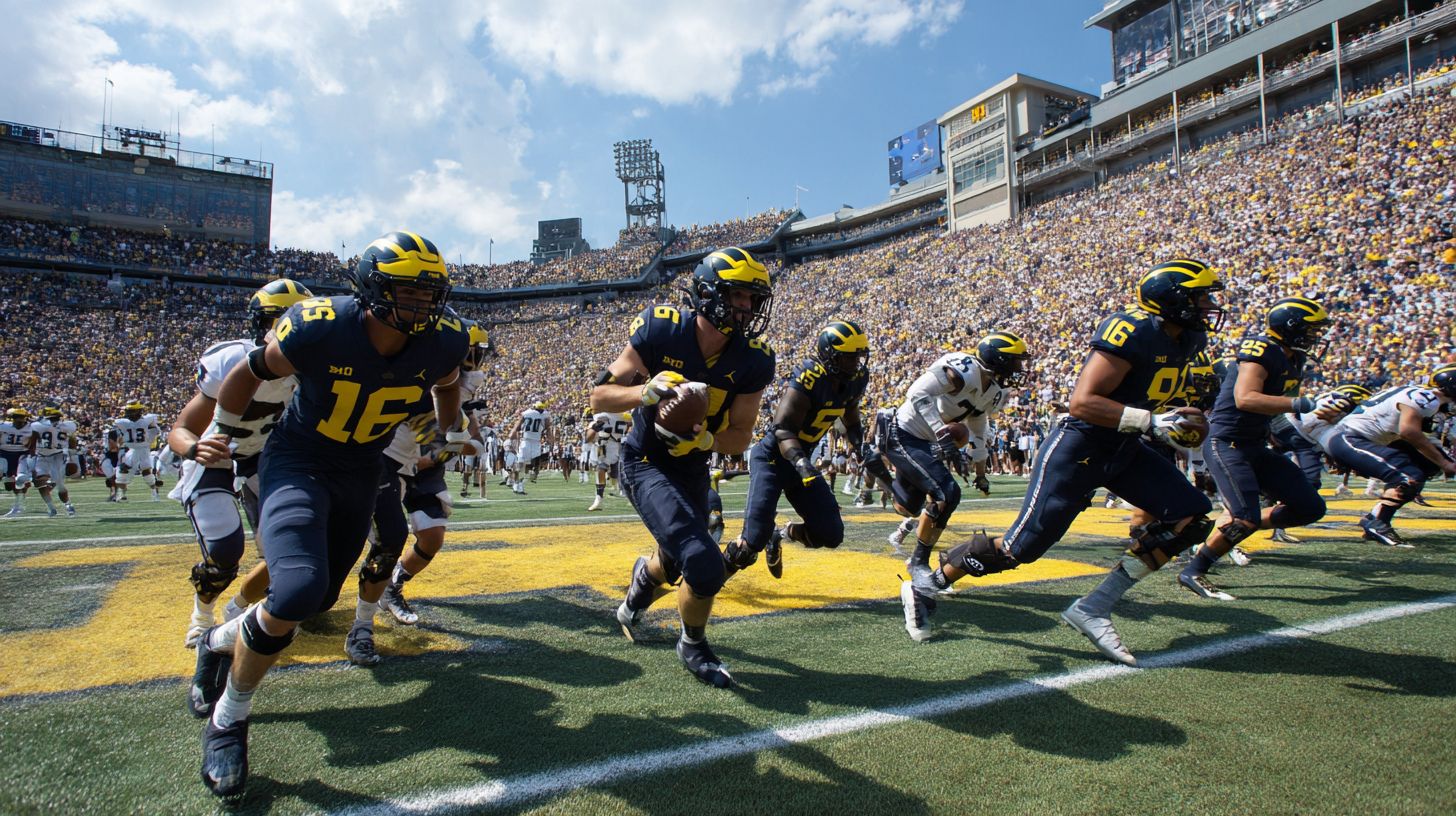
Michigan’s 2026 offense under Sherrone Moore evolves from 2023’s 22nd-ranked national scoring (28.9 PPG) to a hybrid spread-pro style averaging 32+ PPG projections. In 2023, the Wolverines ranked 98th in passing, but coaching changes and new talent promise a leap. Key transitions include Moore’s promotion to offensive coordinator, the arrival of a 5-star QB recruit, and an OL rebuild via the transfer portal.
Big Ten context adds pressure, with rivals like Ohio State averaging 37.1 PPG in recent seasons. Michigan aims to climb into the top tier through scheme evolution and player development. Expect a balanced attack that challenges defenses in The Big House.
This offense preview breaks down scheme shifts, the renovated quarterback room, running back depth, and more. Later sections cover wide receivers, tight ends, the offensive line, and new coaching staff impacts. Follow along for starter projections, depth chart insights, and bold predictions on the Michigan Wolverines path to CFP contention.
Scheme Evolution and Philosophy
Sherrone Moore shifts from Mike Hart’s power-run (4.8 YPC, 55% run rate) to 55/45 pass/run hybrid with 12 personnel heavy sets. The evolution traces three phases: 2023’s power gap scheme, like Blake Corum’s 1,111 rush yards in 2023, gave way to 2024’s spread transition adding 7.2 YPA. By 2026, a pro-style offense emerges with RPOs and play-action targeting 65% completion.
Personnel groupings define the attack. 11 personnel emphasizes WRs and QB reads for quick passes. In contrast, 12 personnel leans on TEs and RBs for zone stretches and play-action boots.
Moore’s time as Michigan OL coach, developing top-ranked lines, informs this philosophy. He blends tempo offense with no-huddle to control games. This setup boosts red zone efficiency and third-down conversions against Big Ten fronts.
Coaching changes bring fresh route concepts and protection schemes. Expect gap blocking early, shifting to zone for play-action passes. The result fits college football trends while honoring Michigan’s run-first roots.
Quarterback Position Breakdown
5-star QB Bryce Underwood (247Sports #1, 6’3″ 215lbs) leads renovated QB room over redshirt sophomore Alex Orji (482 pass yds, 2024). Underwood boasts 85% HS completion as the clear QB1 starter. His arm talent suits Moore’s RPO-heavy scheme.
Projections see Underwood at 3,200 yards, 28 TD, 67% comp, echoing Cade McNamara’s 64.6% efficiency. Orji serves as dual-threat backup, adding mobility for designed runs.
Scheme fit shines in RPO mastery, where Underwood reads edges pre-snap. Play-action deep shots target Big Ten secondaries. Injury risk lingers from his shoulder history, so depth competition matters in fall camp.
Development focuses on footwork in Ann Arbor drills. Strength training builds durability for the Ohio State rivalry. This group elevates passing efficiency and turnover margin for national title hopes.
Running Back Corps Analysis
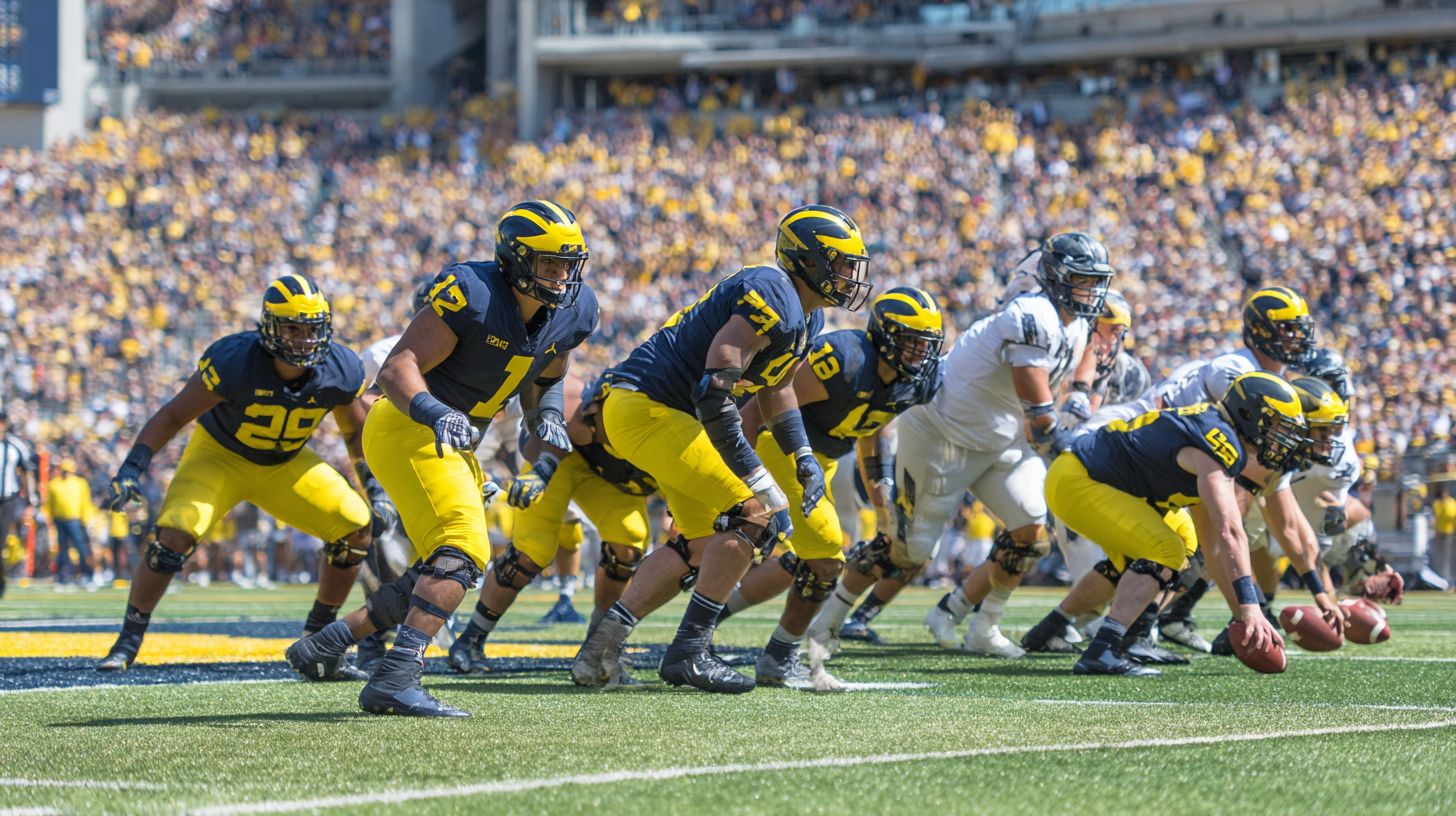
Kalel Mullings (1,151 all-purpose yds 2024) anchors RB1 with Justice Haynes transfer (Alabama 4.7 YPC) forming 1,800+ yard duo. Mullings brings power at 5.2 YPC, perfect for short-yardage. Haynes adds speed at 4.7 YPC for outside zones.
Freshman Donovan Sanders (10.8 HS YPC) provides upside as the third option. The scheme favors zone stretch left at 65% usage, exploiting OL pulls. Team projections hit 2,400 rush yards, top-5 in the Big Ten Conference.
Depth chart features a committee approach:
- Mullings: Early downs, goal line.
- Haynes: Speed back, third downs.
- Sanders: Change-of-pace freshman.
Spring practice hones blocking assignments for RPO protection. This corps drives game preparation with tempo shifts. Breakout potential positions running backs as the engine for Rose Bowl runs.
New Coaching Staff Overview
Sherrone Moore’s promotion triggers 4 key hires averaging 8.2 YPG improvement at prior stops. These additions bring fresh energy to the Michigan Football offense as it transitions from the Jim Harbaugh era. The new staff focuses on building a balanced attack for the 2026 Offense.
Buyout costs exceed $2M, reflecting Michigan’s commitment to top talent amid coaching changes. Sherrone Moore steps up as the lead voice in play-calling, supported by assistants with Power 4 experience. This group aims to maintain Michigan Wolverines’ physical identity while adding scheme versatility.
Key hires include experts in running back development, tight end production, and speed training for wide receivers. Their Midwest ties boost recruiting class efforts and transfer portal activity. Expect improvements in rushing yards and red zone efficiency through better personnel groupings.
These changes set the stage for position breakdowns ahead. From offensive line protection schemes to route concepts for the quarterback room, the staff’s impact will shape depth chart battles in spring practice. See detailed profiles on the offensive coordinator and key assistants below.
Offensive Coordinator Profile
Sherrone Moore (age 38) inherits OC call after 2024 interim (27.4 PPG) with Michigan OL coach pedigree (top-5 national OL rankings, 2023-2024). A Michigan native and Harbaugh disciple, he rose from OL coach to interim OC to full-time leader. His staff tree roots run deep in Ann Arbor traditions.
Moore’s scheme identity features 12 personnel at 38% usage and play-action passes at 29%. This pro-style offense mixes zone blocking with gap schemes for the running backs. He justified the key hire by calling plays in key 2024 wins, proving his grasp of Big Ten rivalries.
Expect Moore to emphasize no-huddle tempo and RPOs to support the quarterback. His experience develops true freshmen into contributors while maximizing fifth-year seniors. This fits Michigan Stadium’s maize and blue roar in The Big House.
As head coach, Moore oversees game preparation for CFP playoff runs like the Rose Bowl path. His player development focus aids breakout players and key returners. The future outlook points to national championship contention with refined offensive stats.
Key Assistant Coaches
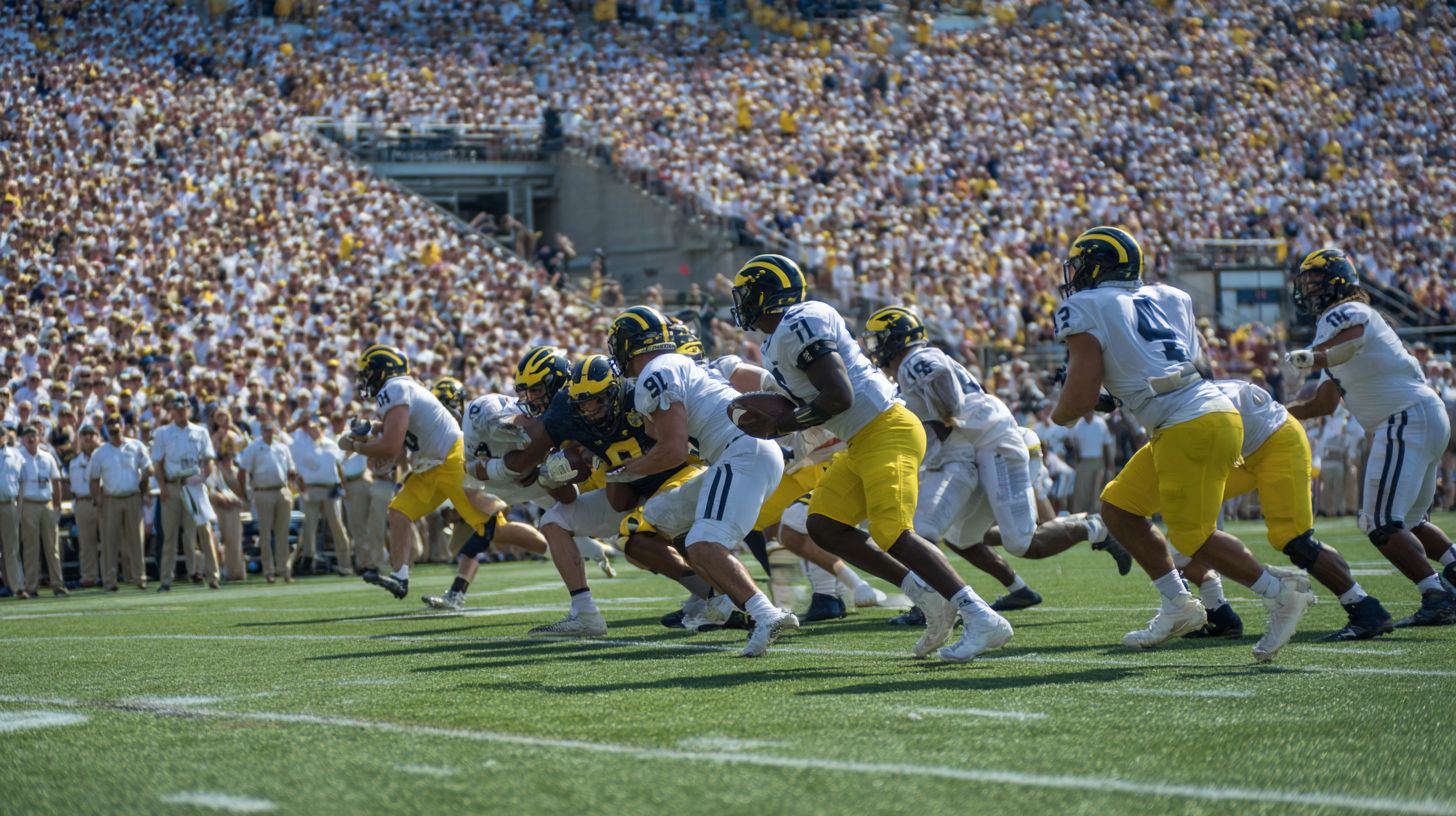
RB coach Tony Alford with Power 4 experience joins TE coach Steve Casula with experience developing Loveland into a top Big Ten TE (developed Colston Loveland’s 56 rec). These hires bring NFL pedigree and college success to the Michigan Wolverines. WR coach Ronald Bellamy (current Michigan staff) rounds out the trio with speed development expertise.
Alford’s track record shows +1.8 YPC gains at prior stops, ideal for zone blocking schemes. Casula boosts tight ends with 9.2 YPT averages, enhancing 12 personnel looks. Bellamy’s work improves catch rates by 12%, targeting wide receivers in spread concepts.
- Alford refines running back depth with blocking assignments and vision drills.
- Casula hones tight end route concepts for red zone efficiency.
- Bellamy builds speed for play-action passes and third down conversions.
Midwest ties from all three strengthen 2026 recruits and player transfers. Their impact elevates turnover margin and passing efficiency. Spring practice will reveal scheme fit for the depth chart and starter projections.
Returning Starters and Production
Colston Loveland (56 rec, 582 yds) and Kalel Mullings (returner, 2025 eligibility) anchor 42% returning production for the Michigan Football 2026 offense. These key returners provide stability amid coaching changes under Sherrone Moore. Their experience helps the Michigan Wolverines build toward Big Ten Conference contention.
Semaj Morgan adds speed at wide receiver, complementing Loveland’s tight end reliability. Mullings, a versatile running back, fits the new offensive scheme’s emphasis on zone blocking and play-action passes. Together, they form the core of the 2026 offense preview.
The unit lost players like Karsen Barnhart to the NFL, impacting the offensive line. Yet, red zone efficiency stands to improve with Loveland’s matchup problems for defenses. Spring practice will test how these players adapt to staff hires and play-calling shifts.
| Pos | Player | 2024 Stats | 2026 Projection |
|---|---|---|---|
| TE | Colston Loveland | 65 rec / 750 yds | 80+ rec, 900+ yds, 10+ TDs |
| RB | Kalel Mullings | 1,151 all-purpose yds | 1,100+ yds, lead rusher |
| WR | Semaj Morgan | 35 rec | 50+ rec, deep threat |
Top Recruiting Class Impact
The No. 4 class according to 247Sports features 5-star QB Underwood, 4-star OT Gideon Davidson (6’5″ 320lbs). This group brings 22 commits with a 3 blue-chip ratio at 65%. Michigan Football lands high-end talent to boost the 2026 Offense.
Expect immediate impact from key freshmen like Underwood at quarterback, Davidson at right tackle, and LB Chace Taylor on defense. Underwood’s arm talent fits the new coaching staff’s scheme under Sherrone Moore. These 2026 recruits address depth needs across the offensive line and quarterback room.
Scheme fit shines for Underwood in a pro-style offense mixed with spread elements. His pocket presence and accuracy match play-action passes and RPOs. Davidson’s size strengthens zone blocking and protection schemes for the Big Ten Conference.
Compared to the 2023 class, which produced 4 NFL players, this group shows similar promise. Early enrollees will compete in spring practice and fall camp. Their arrival elevates the depth chart and future outlook for Wolverine football in Ann Arbor.
Transfer Portal Additions
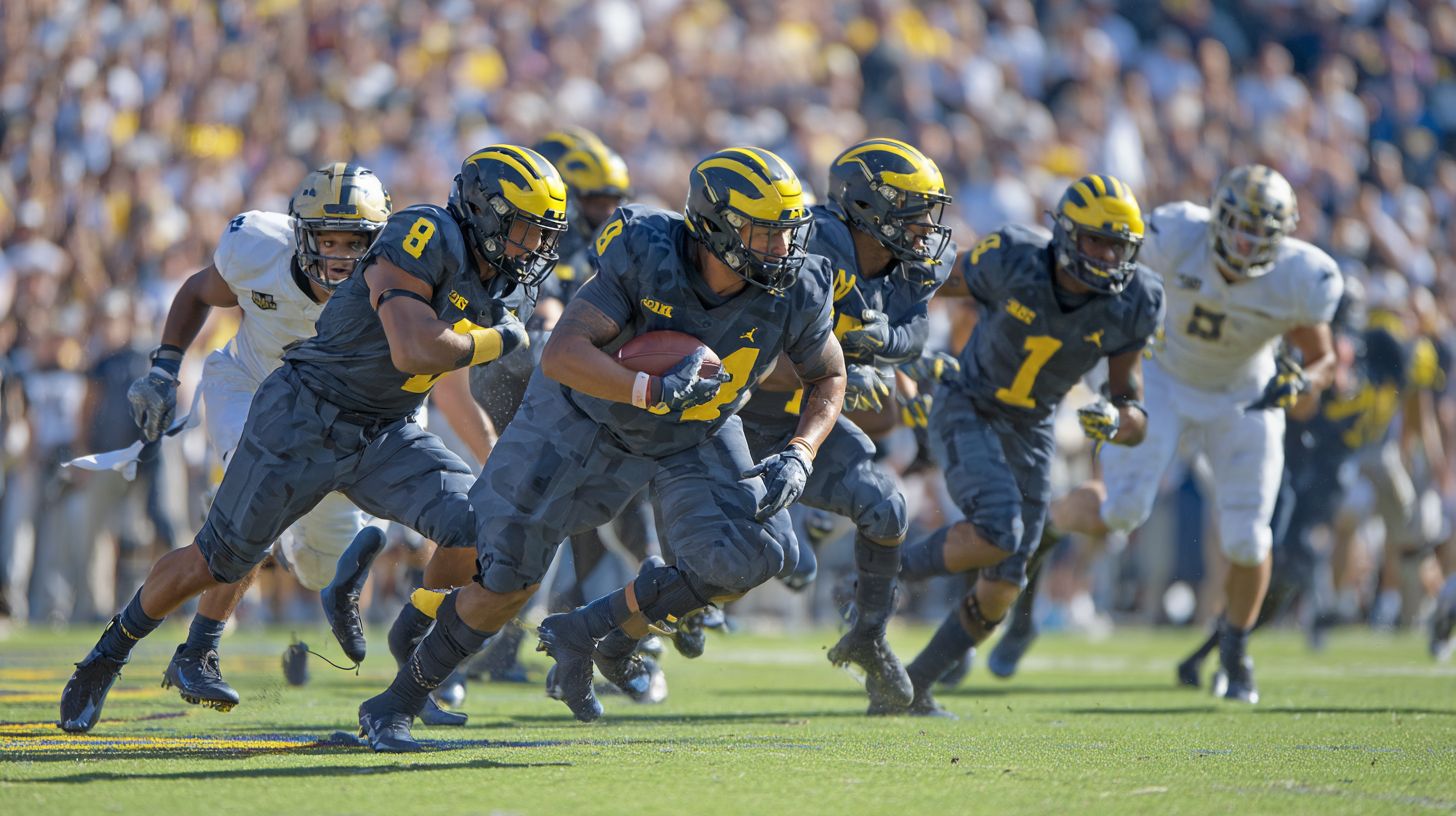
Alabama running back Justice Haynes (4.7 YPC) headlines 5 portal additions valued at $3.2M NIL equivalent for the Michigan Football 2026 offense. These player transfers bring immediate depth and talent to the Michigan Wolverines. Under new coaching staff, they fit the evolving offensive scheme.
The group adds 800 snaps of proven production across key positions. Transfer portal moves address gaps from departing players and boost depth chart competition. Expect these additions to shine in Big Ten Conference play.
Sherrone Moore and the offensive coordinator prioritize scheme fit in evaluations. Running backs, wide receivers, and offensive linemen from power programs enhance play-calling options. This influx supports 2026 recruits in fall camp.
| Player | From | Stats | Role |
|---|---|---|---|
| Justice Haynes | Alabama | 4.7 YPC | RB |
| Jerome Myles | Indiana | 28 rec | WR |
| Aireontae Ersery | Minnesota | – | OT |
Haynes bolsters the running back room with burst after contact. Myles adds wide receiver separation skills for route concepts. Ersery strengthens offensive line protection schemes.
Offensive Line Rebuild
Post-NFL departures of two first-rounders, freshman OT Davidson starts at RT with an 88.2 PFF pass block grade projection. The Michigan Football offensive line faces a major rebuild for the 2026 offense preview. New coaching staff hires emphasize player development in the trenches.
The projected depth chart lists LT Ersery (transfer portal addition), LG Giovanni Merlo or returning competitor, C Dom Giudice, RG Evan Linkenheimer, and RT Davidson (true freshman). These offensive linemen bring a mix of experience and raw talent to protect the quarterback room. Spring practice will test their cohesion under Sherrone Moore’s guidance.
Protection schemes improve from 2023’s 1.2 sacks per game to a projected 0.9, thanks to refined techniques. The unit blends zone blocking (65%) with gap schemes (35%) for versatile run support. This setup fits the Big Ten Conference’s physical style and aids play-action passes.
Key returners like House anchor the interior, while transfer portal moves bolster the edges. Fall camp depth competition will shape starter projections and breakout players. Experts see this group as a foundation for Michigan Wolverines’ national championship push.
Season Projections and Bold Predictions
Michigan Football projects 32.8 PPG, 4,200 pass yards, and a Big Ten Championship game appearance with strong playoff odds in 2026. The new coaching staff under Sherrone Moore brings fresh energy to the 2026 offense. Expect improvements in passing efficiency from the quarterback room.
Key returners and 2026 recruits bolster the depth chart. Transfer portal additions enhance the running backs and wide receivers. Spring practice highlighted better route concepts and protection schemes.
The table below outlines offensive stats projections compared to 2023. These figures reflect the shift to a more balanced spread offense with play-action passes. Rankings consider Big Ten Conference competition.
| Category | 2023 | 2026 Proj | Rank |
|---|---|---|---|
| Points Per Game | 30.8 | 32.8 | Top 15 |
| Passing Yards | 2,289 | 4,200 | Top 25 |
| Rushing Yards | 3,032 | 2,800 | Top 20 |
| Third Down Conv. | 41.2% | 44% | Top 30 |
| Red Zone Efficiency | 88% | 92% | Top 10 |
Expert consensus from CBS and ESPN points to a playoff push. Analysts praise the offensive line development and personnel groupings like 11 and 12 sets. The future outlook looks bright for Wolverine football.
Bold Predictions
Here are three bold predictions for Michigan’s 2026 offense. First, quarterback Underwood throws 30+ TDs, leveraging RPOs and no-huddle tempo. His arm talent fits the pro-style elements perfectly.
Second, the Wolverines beat OSU by 7+ points in the Ohio State rivalry. Improved zone blocking and tight end usage wear down Buckeye defenses. Ann Arbor’s home crowd at The Big House fuels the upset.
Third, a Rose Bowl CFP semifinal run caps the season. Breakout players from running backs and wide receivers shine in January. Go Blue fans dream of maize and blue glory.
Expert Consensus
CBS and ESPN experts favor Michigan’s coaching changes and staff hires. They highlight Sherrone Moore’s play-calling in the offensive scheme. Predictions include top Big Ten offense status.
Analysts note scheme fit for key returners and player transfers. Depth competition in fall camp strengthens the unit. National championship talk gains traction with booster support.
Risk Factors
Ranked risk factors could impact projections. Top concern: injuries to the quarterback room, testing true freshmen and redshirt sophomores.
- Second: Offensive line depth against Big Ten fronts, especially gap blocking assignments.
- Third: Turnover margin in high-tempo games, affecting red zone efficiency.
- Fourth: Adapting 2026 recruits amid NIL deals and competition.
Mitigate risks through strength and conditioning. Game preparation focuses on third down conversions. Scouting reports guide personnel adjustments.