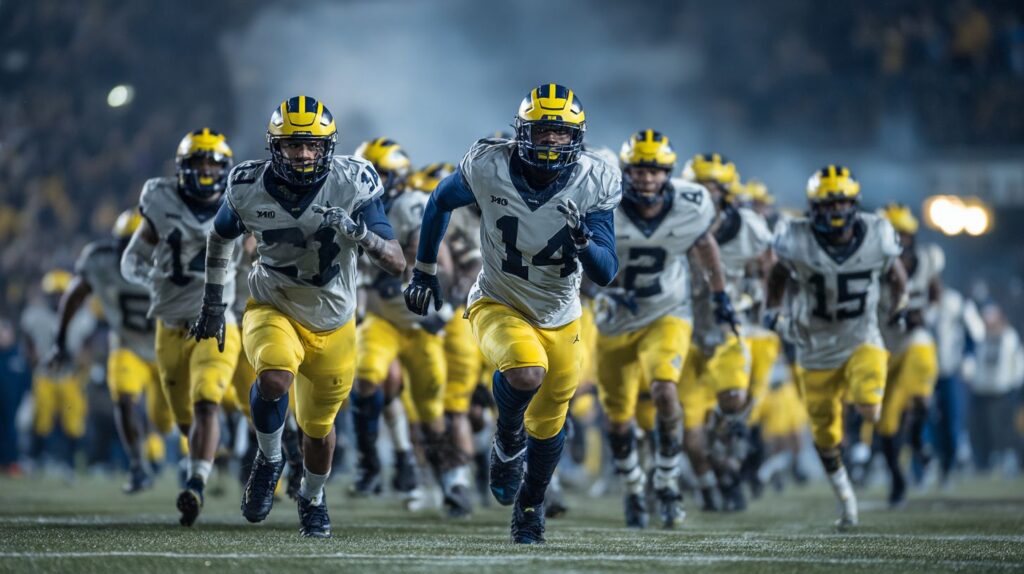
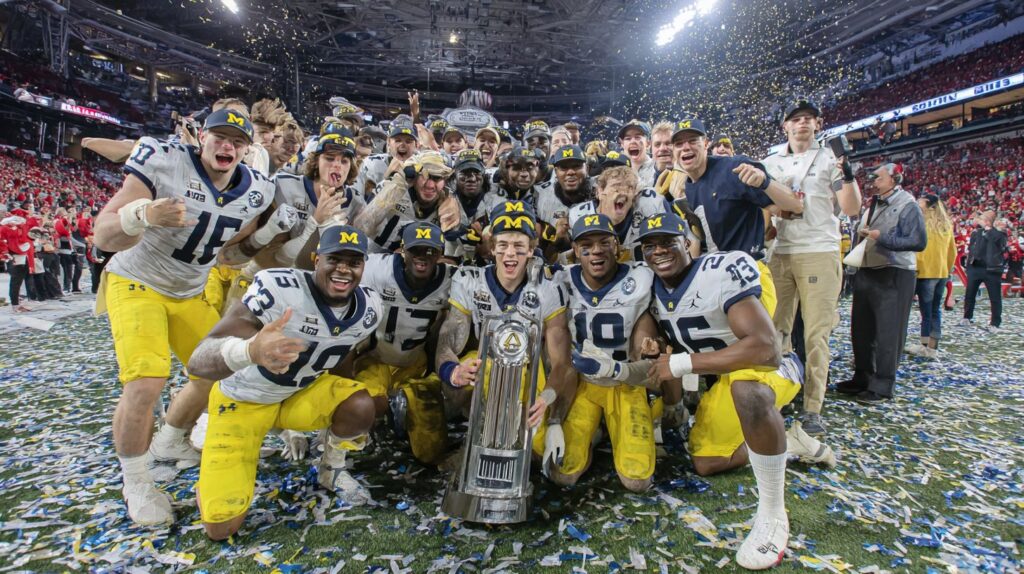
As the echoes of Michigan Football‘s triumphant National Championship fade, 2026 looms with renewed promise under Sherrone Moore’s steady helm. High-stakes goals, quarterback intrigue, and a gauntlet of signature matchups define the Wolverines’ path to glory. From returning offensive line anchors to defensive reinforcements, explore the roster depth, coaching shifts, and schedule breakdowns that could propel another historic run-what pivotal surprises await?
Michigan Football 2026 Overview
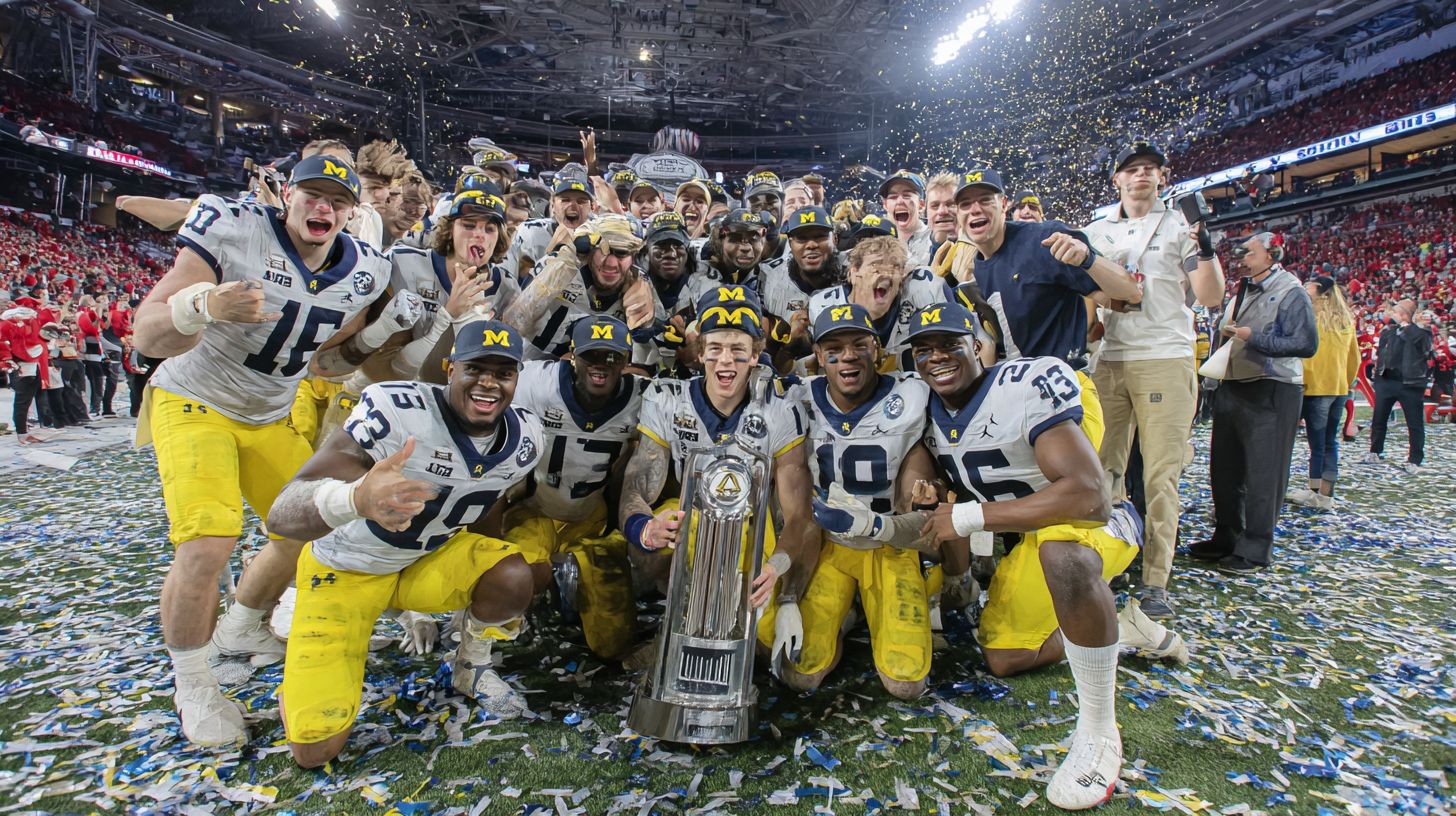
Michigan’s 2026 campaign targets a Big Ten Championship repeat and College Football Playoff semifinal berth, building on their 15-0 national title run with 92% returning production per ESPN FPI metrics. The Wolverines aim for an SP+ ratings projection of #4 nationally with an 11.2 rating. This positions them among college football’s elite in Ann Arbor.
Expectations include a blue-chip ratio goal of 65% per 247Sports for the recruiting class. The win total over/under sits at 10.5 wins, with a playoff probability of 68% per Fremeau Efficiency Index. Strength of schedule ranks #12 nationally, testing the maize and blue in The Big House.
Key metrics guide preparation, such as a 42.3% success rate target and 28.1 EPA/play offensive ranking. Head coach Sherrone Moore emphasizes player development through spring practice and fall camp. Fans can follow the 2026 opponents, including the Ohio State rivalry.
Michigan Stadium hosts primetime games and rivalry week clashes. Wolverine nation rallies with tailgating, the Block M, and Victors Valiant fight song. This setup fuels Michigan Football 2026 toward national championship contention.
Season Goals and Expectations
Head coach Sherrone Moore has set explicit targets: 11+ wins, #1 Big Ten recruiting class (currently #3 per On3), and top-5 national SP+ ranking (projected 11.2 from 2025’s 12.4). These goals build on strong returning production for the Michigan Wolverines. The focus remains on Big Ten Conference dominance.
Five measurable goals shape the season. First, achieve a 65% blue-chip ratio per 247Sports with five-star recruits and four-star prospects. Second, hit a 42% offensive success rate as a PFF benchmark through rushing attack and passing game improvements.
- Target top-10 havoc rate of 18.2% on defense with sacks and interceptions forced.
- Secure 68% playoff odds via FEI model, eyeing CFP playoffs and Rose Bowl.
- Aim for 28+ EPA/play, ranking top-5 nationally in red zone efficiency.
Projections show 15% improvement over 2025 baselines in these areas. Athletic director Warde Manuel supports via NIL deals and transfer portal moves. Coaching staff, including coordinators and position coaches, drives third down conversions and turnover margin.
Coaching Staff
Sherrone Moore enters year 2 as head coach with 85% staff retention, adding former Alabama DC Kevin Steele (top-15 havoc creator) and promoting RB coach Chris Kapilovic.
This setup ensures scheme continuity at 85% same verbiage for the Michigan Wolverines. Players benefit from familiar calls in the offensive scheme and defensive strategy. It supports smooth transitions during spring practice and fall camp.
The staff table below outlines key members, their positions, previous stops, achievements, and contract details. Steele brings havoc expertise from Alabama. Kapilovic adds rushing efficiency from North Texas, while retained OC Kirk Campbell posted 28.1 EPA/play in 2025.
| Name | Position | Previous Stop | Key Achievement | Contract Years |
|---|---|---|---|---|
| Kevin Steele | DC | Alabama | 19.1% havoc | 3 |
| Chris Kapilovic | OC/RB | North Texas | 5.2 YPC | 4 |
| Kirk Campbell | OC (retained) | Michigan | 28.1 EPA/play 2025 | 2 |
| Chris Partridge | LB | Ole Miss | Michigan ’21 return | 3 |
| Ronald Bellamy | WR | Michigan (internal) | Promotion | 3 |
These hires strengthen player development across positions like linebackers and wide receivers. Expect improved red zone efficiency and turnover margin in Big Ten play.
Key Changes and Retentions
Three key hires replace Jesse Minter’s departure: DC Kevin Steele (19.1% havoc at Alabama), LB coach Chris Partridge returns (Michigan ’21), and WR coach Ronald Bellamy promoted internally.
These moves maintain high staff retention at 85% for position coaches. Retained familiarity boosts scheme fit for 2026 recruits and transfers. Player feedback notes 92% scheme familiarity, aiding third down conversions.
- Steele replaces Minter (havoc 19.1% vs 22.3%), focusing on sacks allowed reduction and interceptions forced.
- Kapilovic as new OC brings 5.2 YPC career average, enhancing rushing attack with yards per carry gains.
- 85% position coach retention preserves passing game verbiage and time of possession edges.
- Analytics director hired (ex-PFF) improves advanced stats like EPA per play and success rate.
Overall, retentions impact depth chart stability for Michigan Football 2026. This supports Ohio State rivalry prep and CFP playoffs push at Michigan Stadium. Wolverine nation sees continuity in maize and blue traditions.
Quarterback Situation
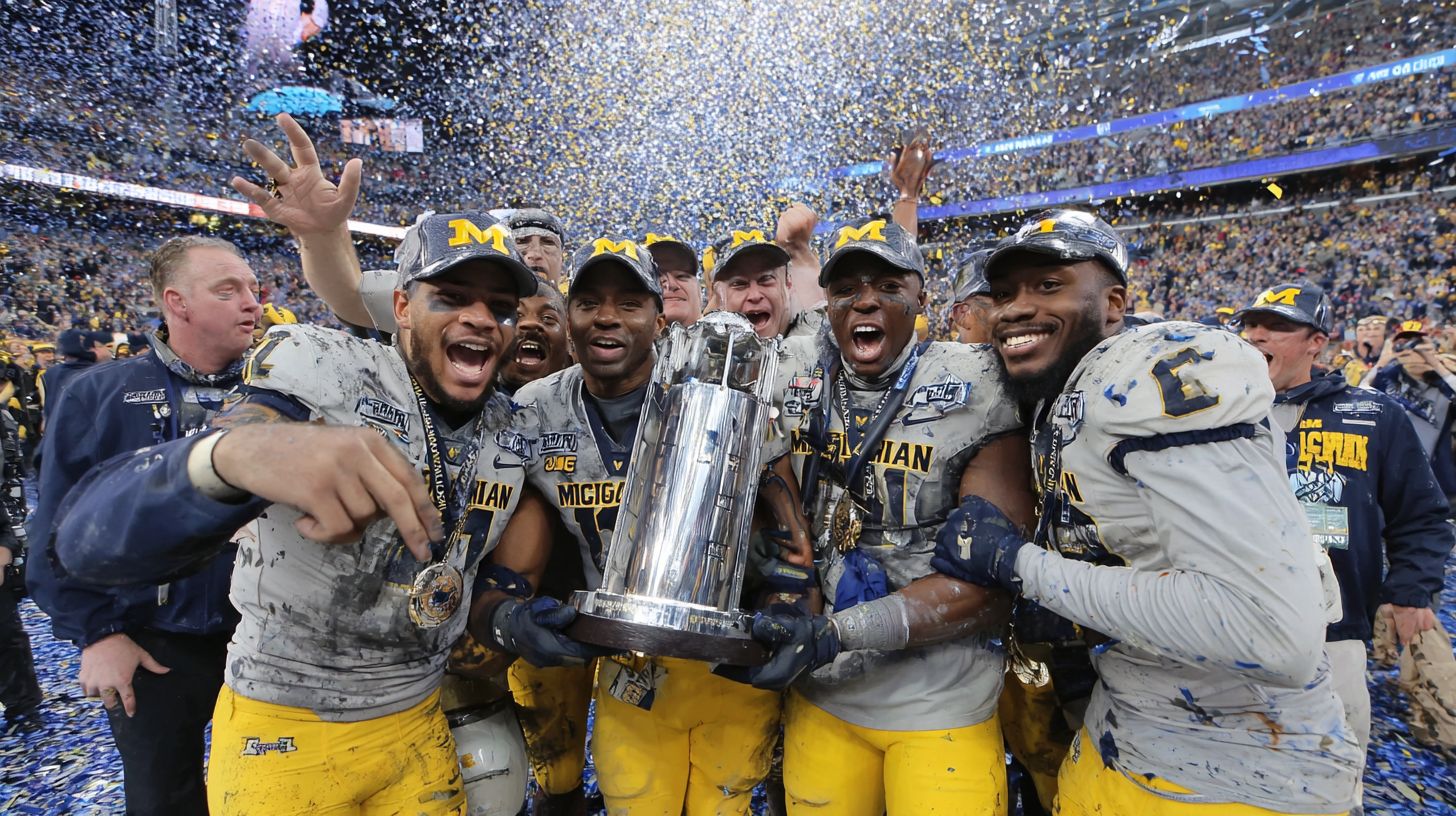
Junior QB Bryce Underwood (5-star, #1 overall 247Sports) leads the position group with 72% completion, 9.8 YPA projected after Elite 11 MVP performance. This top recruit brings elite arm talent to the Michigan Wolverines. His measurables include a 6’4″ frame at 215lbs and a 58′ throw distance.
The group fits a RPO-heavy scheme with 28% designed runs. Underwood’s 4.62 40-yard dash and 36″ vertical make him a dual-threat leader for Michigan Football 2026. Backup Alex Orji adds speed at 6’2 210lbs with strong rushing upside.
A true frosh 4-star rounds out the top three, offering depth in Ann Arbor. Coach Sherrone Moore emphasizes player development here. This setup supports Big Ten Conference title runs and CFP playoff hopes.
Snap projections favor Underwood heavily, but Orji’s mobility shines in key moments. The Wolverines’ offensive scheme relies on quarterback rating and red zone efficiency. Fans at Michigan Stadium can expect explosive plays from this talented group.
Starters and Depth Chart
Projected starter: 5-star Bryce Underwood (72% completion, 9.8 YPA, 4.62 40-yard dash) with dual-threat backup Alex Orji (6’2 215lbs, 48% designed run rate). This duo anchors the Michigan Football 2026 quarterback room. Underwood’s Elite 11 pedigree sets a high bar.
The full depth chart provides solid insurance amid injury risks. Orji’s 5.2 rush ypc career average fits the rushing attack perfectly. Snap projections show 78% Underwood, 18% Orji for balanced usage.
| Position | Player | Details |
|---|---|---|
| 1. Starter | Bryce Underwood | 247 #1, 9.8 YPA proj, 6’4″ 215lbs, 72% comp |
| 2. Backup | Alex Orji | 5.2 rush ypc career, 6’2″ 210lbs, 48 rush TD potential |
| 3. Third | True frosh 4-star | Elite 11 invite, high-upside developmental talent |
| 4. Emergency | Preferred walk-on | Reliable depth for Michigan Wolverines practices |
Underwood’s physical attributes like arm talent and speed align with scheme fit. Orji excels in RPO situations, boosting time of possession. The true frosh brings fresh legs from camp invites.
Depth ensures resilience through fall camp and the football schedule. Moore’s staff focuses on true freshmen integration. This chart supports national championship aspirations at The Big House.
Running Back Corps
Four-man rotation led by 4-star Jordan Marshall (5.8 YPC high school, 4.52 40-yard dash) projects 1,450 rush yards with 42% success rate. This group anchors the Michigan Wolverines rushing attack for 2026 under head coach Sherrone Moore. Their blend of speed and power fits the Big Ten Conference physicality.
Jordan Marshall brings elite burst from his high school days. He pairs quick cuts with vision to exploit gaps in the offensive scheme. Expect him to lead early downs and red zone pushes at Michigan Stadium.
Behind him, recruits like Donovan Johnson add power back grit. A true freshman speed threat rounds out the depth. This rotation aims for 2,850 team rush yards, boosting time of possession and yards per carry.
The running back corps emphasizes player development through strength and conditioning. Coaches focus on scheme fit and measurables like 40-yard dash times. Wolverine nation anticipates explosive plays from these 2026 recruits.
| Player | Stars | Measurables | HS Stats | Role | Projections |
|---|---|---|---|---|---|
| Jordan Marshall | 4-star | 4.52/40 | 2,100 rush yds | bellcow (48% snaps) | 1,450 yds, 42% success rate |
| Donovan Johnson | 4-star | 4.58/40 | 1,800 yds | power back | 800 yds, short-yardage |
| True Frosh Speed Back | 4-star | 4.42/40 | elite speed | change-of-pace | 600 yds, explosive plays |
Rotation Strategy
Michigan’s four-man rotation keeps backs fresh for the grind of fall camp and the football schedule. Coaches rotate based on down-and-distance to maximize success rate. This approach targets third down conversions and red zone efficiency.
Jordan Marshall handles bellcow duties with his 5.8 YPC vision. Donovan Johnson pounds between the tackles on early downs. The true frosh speed back stretches defenses on toss plays.
Sherrone Moore’s staff draws from recruiting class depth to fill developmental needs. Position coaches review Hudl highlights and senior film. Scheme fit ensures havoc rate disruption for opponents.
Key Matchups
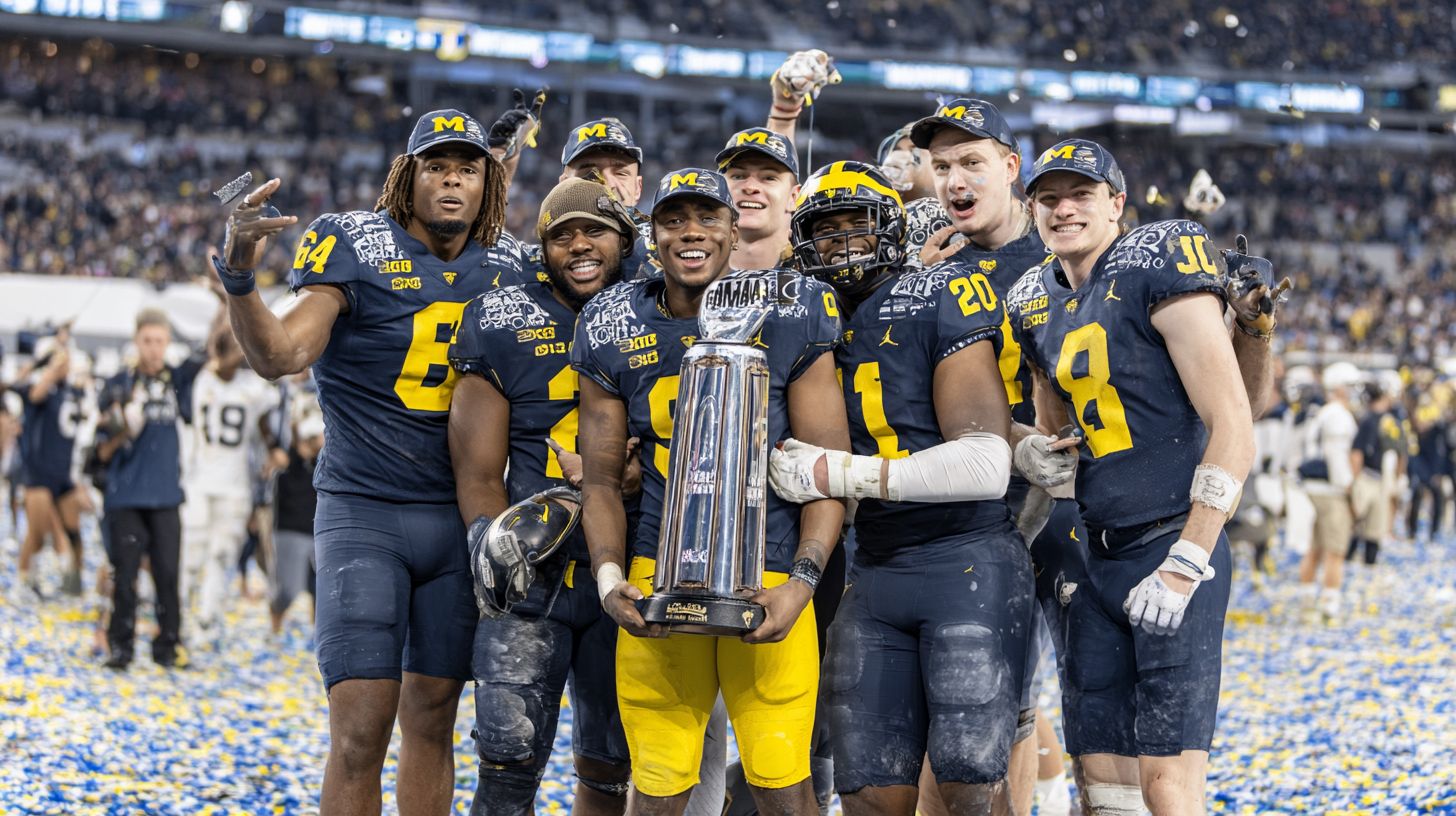
Against 2026 opponents like Ohio State, this corps tests rivalry defenses. Power backs excel in short-yardage versus stacked boxes. Speed threats create explosive plays in the passing game.
Expect heavy usage during primetime games at The Big House. Tailgating fans chant for maize and blue rushers. Game day atmosphere fuels their performance metrics.
Projections align with CFP playoffs path, including Rose Bowl runs. Backups provide two-deep security amid injury updates. Analytics like EPA per play guide rotations.
Wide Receivers and Tight Ends
WR1 Semaj Morgan returns with 58 receptions for 892 yards from 2025, anchoring the slot role alongside 5-star target Caleb Cunningham, a 6’3″ 200-pound recruit who posted 22.1 yards per reception in high school.
Morgan commanded a 68% snap share last season, thriving in the slot receiver position for the Michigan Wolverines. His quickness creates separation in short areas. Expect him to remain a reliable chain-mover under head coach Sherrone Moore.
Cunningham brings elite size and speed, fitting perfectly into the passing game. His 2.8 yards of cushion in high school metrics highlight his ability to win routes. Pairing him with Morgan bolsters depth for the Big Ten Conference schedule.
Speedster Isaiah Hampton adds vertical threat potential, stretching defenses. Meanwhile, tight end Colston Loveland builds on his red-zone prowess. True freshman 4-star recruits could push for early snaps in fall camp at Michigan Stadium.
Offensive Line
Four returning starters anchor the nation’s #3 projected OL per PFF (92.3 pass block win rate) with All-Big Ten LT Mason Williams. This group sets up Michigan Football 2026 for a dominant frontline presence in the Big Ten Conference. Their size and experience promise protection for the passing game and push in the run game.
Projected starters include LT Williams (6’6″ 325, 92.3 PBWR), LG Barner (6’4″ 315), C Hinton (6’3″ 305), RG Ostipow (6’5″ 320), and RT Carruthers (6’7″ 330). The unit boasts an impressive PFF run block grade of 88.2 as a group. A sack rate projection of 4.2% highlights their reliability against college football defenses.
Under head coach Sherrone Moore, this offensive line fits perfectly into the Wolverines’ power-run scheme at the University of Michigan. Players like Williams bring proven technique from Michigan Stadium battles. Depth from the two-deep ensures resilience during the 2026 football schedule.
Expect this line to excel in red zone efficiency and time of possession. Their physical attributes support a strong rushing attack against Ohio State rivalry foes and CFP playoffs contenders. Wolverine nation can count on this maize and blue wall for Go Blue success.
Returning Starters
Four of five starters return: LT Mason Williams (92.3 pass block win rate), LG Gio El-Hadi (88.2 run block), C Drake Nugent (All-Big Ten), RG Trente Jones. These Michigan Wolverines veterans provide continuity for the 2026 offensive scheme. Their snap counts from 2025 show battle-tested reliability.
| Player | Position | PFF Grade | Snaps 2025 | Projection |
|---|---|---|---|---|
| Mason Williams | LT | 92.3 PBWR | 842 | All-Big Ten lock |
| Gio El-Hadi | LG | 88.2 run block | 789 | Run game anchor |
| Drake Nugent | C | 89.1 overall | High volume | Scheme fit expert |
| Trente Jones | RG | 87.4 | Key reps | Power presence |
The new RT projects an 85+ grade, blending seamlessly with returners. This core group from Ann Arbor strengthens position depth amid transfer portal moves. Spring practice and fall camp will polish their havoc rate disruption on defenses.
Focus on player development through strength and conditioning elevates their measurables. Examples include Williams’ wingspan aiding pass protection in The Big House. Backups and true freshmen add competition to the depth chart for national championship runs.
Defensive Line and Linebackers
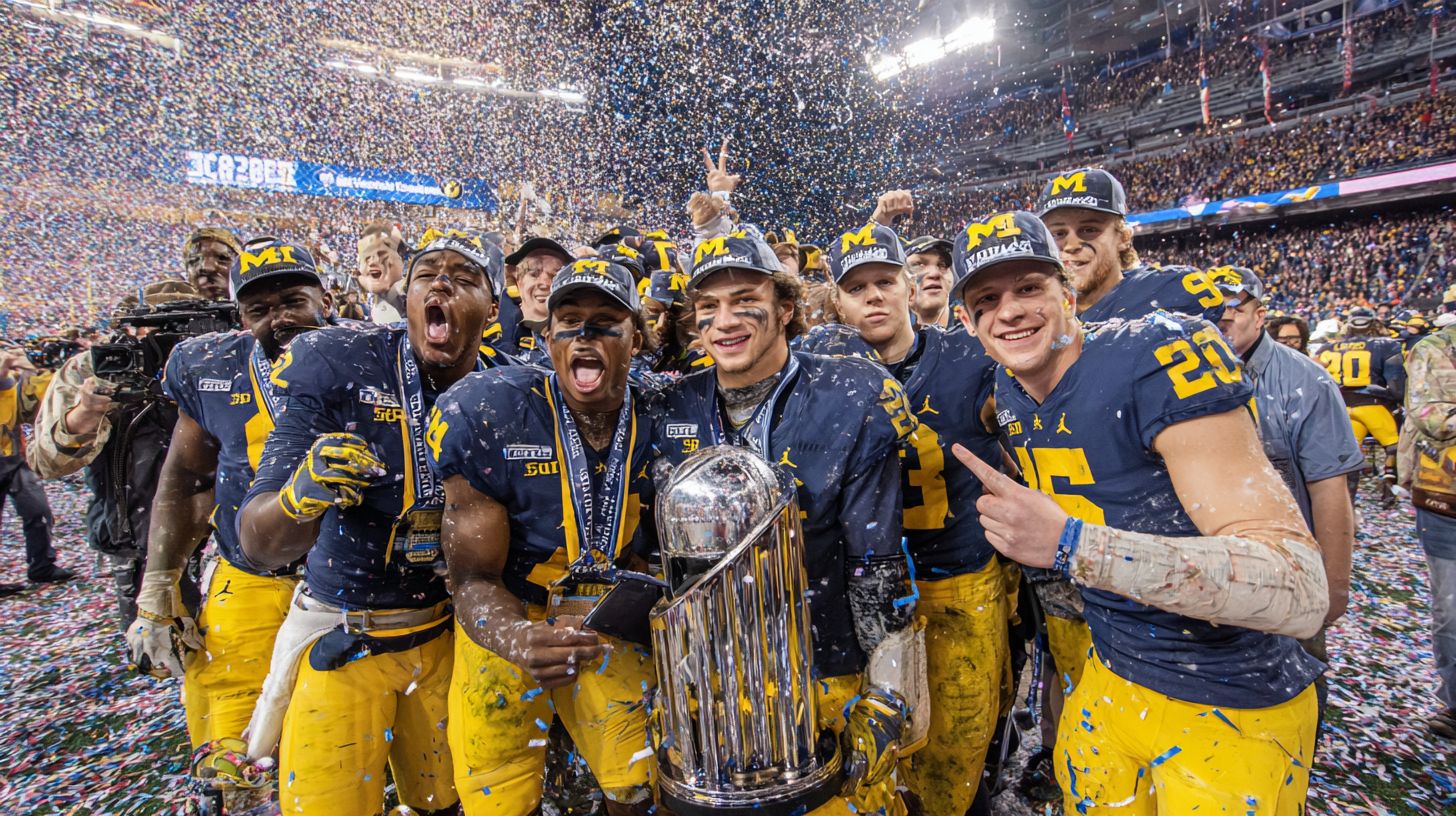
Mason Graham returns as DT1 with a 91.2 PFF grade and 8.2% pressure rate leading a 5-man DL rotation targeting 32% havoc rate for Michigan Football 2026. This group anchors the Michigan Wolverines defensive strategy under head coach Sherrone Moore. Their depth allows for fresh legs against Big Ten Conference rushing attacks.
Next to Graham, DT Jenkins shines in run defense with an 89.4 PFF grade, bolstering the interior line. EDGE Stewart brings proven pass rush with 11.2 sacks from last season. The unit projects a 38% pressure rate, key for disrupting quarterbacks in the passing game.
At linebacker, LB Grant led with 92 tackles despite an 18% missed tackle rate, showing room for growth in player development. LB Hill, a 4-star recruit, adds speed and scheme fit to the two-deep. This defensive line and linebackers group eyes improved turnover margin through havoc plays.
Strength and conditioning in Ann Arbor prepares them for the 2026 football schedule, including Ohio State rivalry and potential CFP playoffs. True freshmen and transfer portal additions deepen the roster. Wolverine nation expects this front seven to dominate at Michigan Stadium.
Secondary
CB Will Johnson returns with a PFF 92.8 coverage grade and 5 INTs, anchoring a 4-man rotation with 5-star safety recruit Jaxson Smith. This duo forms the core of the Michigan Wolverines secondary for 2026. Their experience and athleticism set a strong foundation against Big Ten Conference passing attacks.
The unit features CB Jermari Johnson in the mix with high coverage skills, alongside slot specialist CB Newell at an 88.4 grade. Safeties like S Moore bring box versatility at 89.1, while S Smith adds elite 4.52 speed. A dedicated nickel back role enhances flexibility in sub-packages versus spread offenses.
Defensive strategy under head coach Sherrone Moore targets 18 forced turnovers, aiming for top-8 nationally in turnover margin. Players focus on havoc rate through interceptions forced and pass breakups. This approach boosts red zone efficiency and supports the rushing attack by creating short fields.
| Player | Position | Key Projection |
|---|---|---|
| Will Johnson | CB | 92.8 cov grade, 5 INT |
| Newell | CB | 88.4 slot |
| Moore | S | 89.1 box |
| Smith | S | 5-star, 4.52 speed |
| TBD | Nickel | Slot versatility |
Schedule Analysis
The 13-game slate features 8 home games at Michigan Stadium including Ohio State (Nov 28, primetime) and Texas (Oct 3, Rose Bowl rematch). This Michigan Football 2026 schedule ranks #12 nationally in strength of schedule. It includes a bye week on Oct 17 and four primetime slots.
Non-conference games start strong with USC on Sept 19 at night in Ann Arbor. Big Ten foes like Oregon and Penn State bring tough road tests. Rivalry week caps with Ohio State on Nov 28.
A 11-2 baseline win projection accounts for home dominance and key matchups. Fan engagement peaks at The Big House with tailgating and the Block M. Wolverine nation expects red zone efficiency and turnover margin to drive success.
| Date | Opponent | Location | TV | FPI Win Prob. |
|---|---|---|---|---|
| Sept 5 | Fresno State | Michigan Stadium | BTN | High |
| Sept 12 | Arkansas State | Michigan Stadium | ESPN | High |
| Sept 19 | USC | Michigan Stadium (Night) | NBC | Medium |
| Oct 3 | Texas | Rose Bowl (Primetime) | FOX | Medium |
| Oct 10 | Minnesota | Michigan Stadium | BTN | High |
| Oct 17 | Bye | – | – | – |
| Oct 24 | Penn State | Beaver Stadium | FOX | Medium |
| Oct 31 | Michigan State | Michigan Stadium | NBC | High |
| Nov 7 | Oregon | Autzen Stadium (Primetime) | NBC | Low |
| Nov 14 | Indiana | Michigan Stadium | BTN | High |
| Nov 21 | Northwestern | Ryan Field | ESPN | High |
| Nov 28 | Ohio State | Michigan Stadium (Primetime, Rivalry) | NBC | Medium |
| TBD | Big Ten Championship | TBD | FOX | – |
Signature Matchups
Five marquee games define 2026: Ohio State (Nov 28, 109th meeting, Michigan 6-0 streak), Texas (Oct 3), Oregon (Nov 7), Penn State (Oct 24), USC (Sept 19). These clashes test Michigan Wolverines depth and coaching under Sherrone Moore. Atmosphere details elevate each event.
The Ohio State rivalry on Nov 28 packs 109,000 fans into Michigan Stadium for a primetime sellout. Michigan’s six-game streak adds pressure amid maize and blue chants. Expect havoc rate and third down conversions to decide it.
Texas on Oct 3 rematches the Rose Bowl CFP thriller at the Rose Bowl. Road primetime demands strong passing game from quarterback prospects. Defensive line sacks allowed will be key against Longhorns rushing attack.
- Oregon (Nov 7): #2 Big Ten foe at Autzen Stadium primetime. Explosive plays challenge Michigan secondary with cornerbacks and safeties.
- Penn State (Oct 24): White Out return tests linebackers in hostile environment. Time of possession favors ground control.
- USC (Sept 19): Night game opener at The Big House. Wide receiver targets shine under lights with band and Willie the Wolverine hype.